
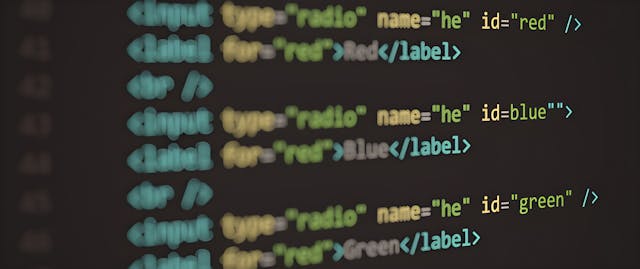
The Myth That Formatting Doesn’t Matter
Some developers treat HTML like a disposable wrapper — something that just needs to “work.”
They’ll minify, inline, and stack divs until the DOM looks like a Tetris level from hell.
But here’s the truth: clean HTML is not just about pretty indentation.
It’s about structure, meaning, and communication — between the code, the browser, and every human who will touch that project after you.
In 2026, with frameworks evolving faster than your caffeine tolerance, HTML remains the invisible backbone of everything we build. And it’s time we stop pretending otherwise.
Clean HTML Is the Foundation of Everything
Think of HTML as the skeleton.
CSS gives it muscle, JavaScript gives it motion, but without a solid skeleton, everything collapses under its own cleverness.
A clean HTML structure helps browsers render faster, makes accessibility tools read more accurately, and gives search engines an easier time understanding your content.
A messy DOM isn’t just ugly — it’s expensive. Each redundant
<div>If you’ve ever had to clean up an ancient project full of nested tables and random spans, you know the pain.
That’s why tools like the HTML Formatter exist — to turn spaghetti markup into readable, maintainable code before it ruins your next sprint.
Search Engines Love Order (Even If You Don’t)
Search engines in 2026 are smarter than ever — but they still depend on structure.
Semantic HTML helps crawlers understand hierarchy, context, and relationships.
A
<main><article><section>But if your markup looks like it was written by a cat walking across a keyboard, no AI model will save your ranking.
Formatting clean HTML ensures your semantic structure actually makes sense. Pair that with tools like the CSS Formatter to keep styling lean and readable, and you’re halfway to SEO nirvana.
Accessibility Is Not Optional Anymore
There’s also a moral side to this.
Accessibility is no longer a “nice to have.” It’s law in many regions, and a quality standard everywhere else.
Clean HTML is inherently more accessible — screen readers rely on hierarchy, alt attributes, and proper nesting. When your tags are a mess, assistive technologies fail, and users are left stranded.
Formatting your HTML properly, using semantic tags, and keeping indentation consistent helps not only machines but real people.
And if that doesn’t convince you, think of the lawsuits.
Performance Starts at the Markup
Performance optimization doesn’t begin with lazy loading or CDN tricks — it starts with the HTML itself.
Every time a browser parses your DOM, it processes structure, attributes, and dependencies.
When your HTML is bloated, full of unused inline styles or comments, you’re burning cycles for nothing.
Clean, formatted markup makes it easier to minify later, easier to compress, and faster to ship. Combine it with the Image Optimizer to reduce visual asset size, and suddenly your load times start to breathe again.
It’s not rocket science — just discipline.
Frameworks Come and Go — HTML Stays
Developers love their frameworks like they love coffee: hot, trendy, and destined to be replaced in six months.
But every React, Vue, or Svelte app still compiles down to one truth: HTML.
The DOM doesn’t care how fancy your syntax is. When your generated HTML is messy, you’ll face hydration errors, accessibility problems, and broken layouts — and no library will fix that for you.
Using a formatter before you deploy ensures that even dynamically rendered pages remain clean and predictable.
A simple pass through the HTML Formatter before pushing to production can save hours of confusion later.
Consistency Is a Developer’s Best Friend
Have you ever worked on a team where every dev formats code differently?
One person tabs, another spaces, someone else mixes both like it’s modern art.
The result: unreadable diffs, merge conflicts, and general chaos.
A consistent HTML format keeps everyone aligned.
It’s not about ego or preference — it’s about speed. You should never waste mental energy parsing indentation instead of solving problems.
Use tools that enforce consistent structure across the stack.
The CSS Formatter and JSON Formatter help keep data and presentation just as tidy.
Automate or Regret It Later
Nobody wakes up excited to manually format HTML.
That’s why automation exists.
Integrate the HTML Formatter into your editor or build pipeline.
Have it run pre-commit hooks so your repository always stays clean.
In CI/CD, it can be part of a pre-deploy step, ensuring every HTML file is valid and readable before it ever reaches production.
Pair it with the UUID Generator to add unique identifiers for debugging or dynamic builds without clutter.
Once automation takes over, formatting becomes invisible — and that’s the goal.
Readable Code Builds Trust
If someone opens your HTML and can understand it in 30 seconds, you’ve done your job.
Readable code earns respect — from teammates, from clients, even from your future self six months down the line.
It’s not about being perfect. It’s about being kind to the next person who inherits your codebase.
And in a world where we build faster than we document, clean HTML is documentation.
Final Thoughts: Clean Code Is Sustainable Code
By 2026, AI will write half the web. But someone still has to maintain it.
And the difference between chaos and craftsmanship will be in the details — indentation, naming, hierarchy.
HTML is simple, but simplicity is deceptive.
Clean markup scales better, loads faster, and communicates intent clearly. It’s a quiet kind of brilliance that doesn’t trend on social media but keeps the web standing.
So next time you’re about to push a rushed patch with messy HTML, take five seconds.
Run it through the HTML Formatter.
Your browser, your users, and your future self will thank you.